
A child therapist said it in one sentence. It explained months of frustration, guilt, and endless nighttime cycles we could never break — and it pointed us toward the one thing that finally worked.


Our evenings had stopped feeling like evenings. They felt like a loop we couldn't escape.
He would climb into bed willingly enough — but then the unraveling began. He tugged the blanket up, then pushed it away. He flopped from his back to his side to his stomach and back again. His fingers fidgeted with invisible threads. He whispered questions he wasn't ready to let go of. He tapped the pillow with restless rhythm. He wiggled his toes like his body needed motion to stay alive.
His body was tired. But his brain was scanning the room like a lighthouse on full beam.
By 9pm, tension wrapped around my neck. By 10:30pm, I felt fragile in a way I didn't want to admit. And by 12:15am, when he whispered — "I'm trying, Mom. I just can't stop thinking" — I felt my heart crack.
Not because he couldn't sleep. Because he thought it was his fault.
People kept giving advice, as if we hadn't memorized the entire internet. Lavender. Bedtime routines. Breathing exercises. White noise machines. Quiet time before bed. Reward chart systems. Melatonin gummies.
We tried them all. Some helped a little, for a night or two. None of them touched the real issue.
"He just needs more structure." · "He's overtired." · "Try cutting screen time." · "He'll grow out of it."
None of those answers felt right. Because they were all treating the symptom — the restlessness — without understanding the cause.

The child therapist explained it better than anyone else ever had. She wasn't talking about bad habits or poor discipline. She was talking about biology.
"He's not staying awake because he's energetic. He's staying awake because he can't find anything to anchor him."
— Child therapist's observation, shared by parentI felt that sentence like a door unlocking in my chest.
His nervous system wasn't misbehaving. It was overworking. It was doing exactly what it was designed to do — scanning for safety, seeking input, looking for a signal that said it's okay to let go now. It just couldn't find one.
It needed sensory grounding, not silence. Predictability, not emptiness.
Understanding this changed how we approached bedtime entirely. The nervous system doesn't respond to emptiness — it responds to grounding.
When a child's nervous system is in an alert state, it actively searches for sensory input. An empty, quiet room can actually increase that scanning behavior — there's nothing to signal "safe."
Touch is one of the most direct pathways to the nervous system. Rhythmic tactile input — rubbing a texture, tracing an edge, holding a consistent shape — sends a steady "safe" signal to the brain.
The nervous system calms through consistency. A familiar object with predictable texture and shape becomes a reliable anchor — something the brain can stop searching and simply rest against.
Children who struggle to fall asleep often don't need more silence — they need a tactile anchor. Something real to hold onto while their nervous system completes its natural wind-down process.
Most sleep advice is designed for children whose nervous systems wind down easily in a quiet environment. But for children who need sensory grounding, that advice misses the point entirely.
None of these are bad ideas. They simply don't address the root of what's happening — the nervous system's need for a reliable tactile anchor.
A few nights later, after midnight, I ended up in a forum full of parents describing the exact same patterns. Children who couldn't fall asleep even though they desperately wanted to. Kids whose minds ran like engines without brakes. Kids who needed their hands to calm before their thoughts could.
One parent wrote something that felt like someone had been watching our nights:
"Our kids don't calm down because the room is quiet. They calm down because they finally have something to hold."
— Parent forum, shared experienceParents described their children regulating through touch. Tags. Edges. Fabric textures. Little corners they could rub rhythmically. The nervous system calms through tactile repetition. Consistency. Grounding.
Then someone posted a picture of a pillow designed for exactly those needs.

Designed for the nervous system. Built for the child who needs something real to hold onto.
Everything about it looked like it was designed with intention. Soft contours that fit naturally under a child's cheek and arm. Small rounded ears — perfect for little fingers to trace. A soft tail to hold like a tiny lifeline. Weight and texture placed deliberately, not decoratively.
I bought it without ceremony. Just a tired parent reaching for the one thing that finally made sense.
When it arrived, I didn't hype it. I just said: "Here. Maybe this will feel good."
He traced the seams. Rubbed the fabric between his fingers. Held the tail. Then rested his head on it and breathed out — a long, slow, settling exhale I hadn't heard in weeks.
Ten minutes. Real stillness.
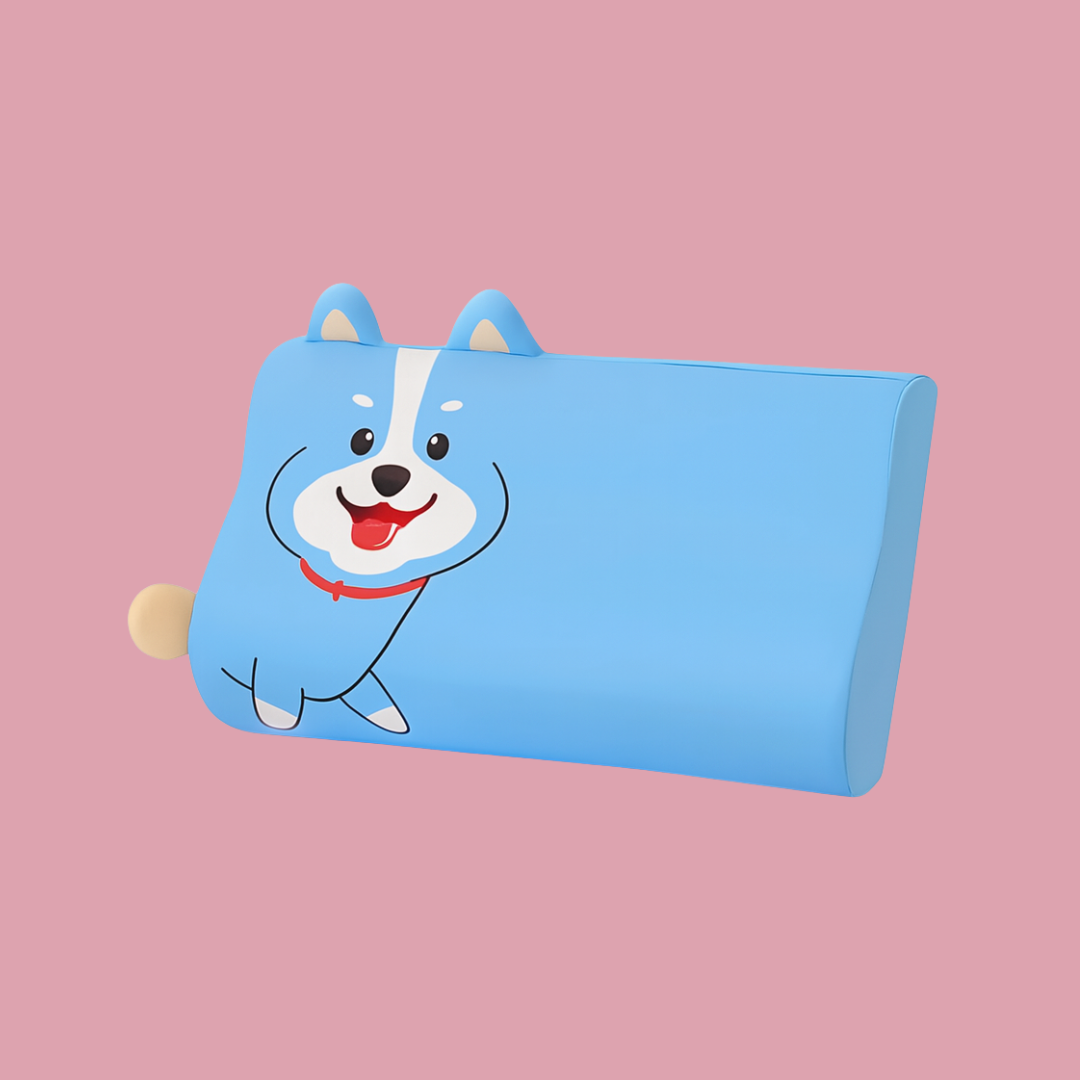
This isn't a pillow with a cute face sewn on. Every design decision serves a sensory purpose.
The small rounded ears aren't decorative — they're functional. Children who fidget, tap, and trace at bedtime are expressing a nervous system need. The Bombees pillow gives those fingers a consistent, predictable surface to explore rhythmically, which is exactly the kind of input that initiates the wind-down response.
Parents consistently report that their children gravitate toward the ears and tail first — instinctively, without being told.
Most pillows are flat rectangles. The Bombees pillow has a contoured, rounded shape that fits naturally against a child's cheek, chest, and arms simultaneously. When a child hugs it, their whole upper body is engaged — which creates a full-body grounding sensation rather than just head support.
This full-body contact is part of why children fall asleep holding it rather than just resting their head on it.
The fabric isn't just soft — it's consistently, predictably soft. The nervous system responds to texture that doesn't surprise it. The Bombees pillow's velvety plush surface provides the same tactile experience every single night, which helps the brain associate it with the transition to sleep.
Consistency is what transforms a comfort object into a genuine sleep anchor.
Within a few nights of consistent use, the pillow begins to function as a powerful sleep cue. The brain learns: when I hold this, it's time to release the day. This is classical conditioning working in your favor — no effort required, no charts, no reminders.
Parents report that the transition time shortens significantly after the first week, as the association deepens.
This is important: the Bombees pillow doesn't sedate, suppress, or alter your child's natural temperament. A sensitive, curious, active child will still be all of those things — just rested. The pillow doesn't change who your child is. It supports who they are by giving their nervous system what it needs to complete its natural wind-down process.
Nothing was wrong with him. His brain simply needed grounding to release the day.
When a child's nervous system completes a full, grounded sleep cycle, the difference shows in the morning. Not just in mood — in presence. In regulation. In the ability to handle the small frustrations of a school day without falling apart.
His teacher said he seemed "more present, more regulated." His mornings stopped starting with meltdowns. He woke with calm eyes — not puffy, not frantic. Just rested.
The whole house felt different. Warmer, softer, safer.
The Bombees pillow doesn't require you to overhaul your bedtime routine. It simply adds a grounding anchor to whatever you're already doing. Keep the bath, the story, the dim lights — and add this. The pillow does its work quietly, in the background, while your child does the rest.
Most parents see a noticeable difference within the first three to five nights. Some within the first night.
Thousands of families have found that the right tactile anchor changes everything about bedtime — and everything about the morning that follows.
Shop the Bombees Pillow →These are experiences shared by parents in our community. Individual results vary — but the pattern is consistent.
"I didn't expect much. We'd tried everything. But within three nights, my daughter was falling asleep in under twenty minutes. She holds the little ears and just... drifts off. I cried the first time it happened."
"My son has always needed to have something to fidget with to fall asleep — his blanket edge, his shirt collar. The Bombees pillow gave him something intentional. He stopped waking up at 2am."
"Our pediatric OT actually recommended something like this. When I found the Bombees pillow, I sent her a photo and she said 'that's exactly what I was thinking.' High praise from a professional."
"He calls it his 'calm buddy.' He asks for it by name now. Bedtime went from a 90-minute battle to a 20-minute routine. I don't know the science behind it — I just know it works."
"What surprised me most was the mornings. He used to wake up grumpy and dysregulated every single day. Now he wakes up calm. His teacher noticed within a week."
"I was skeptical of anything that looked like a stuffed animal. But this isn't a toy — it's a tool. The design is thoughtful in a way you can feel the moment you hold it."
That's what I needed to hear most. Not a diagnosis. Not a fix. Just the understanding that his brain was doing exactly what it was built to do — and that it simply needed the right kind of support to complete its natural process.
The Bombees pillow didn't fix him. It freed him. And that changed everything — the nights, the mornings, the whole texture of our family's days.
When you give children like him what their body has been craving, nights soften, mornings brighten, and everything feels possible again.
"It didn't change who he was. It supported who he is."
If any part of this story sounds like your evenings — if you recognize the restlessness, the fidgeting, the "I'm trying, I just can't stop thinking" — then you already know what I knew at midnight in that forum.
Your child isn't difficult. Their nervous system is searching for an anchor. And now you know where to find one.
Join thousands of families who have discovered that the right tactile support changes bedtime — and everything that comes after it.
Shop the Bombees Sensory Pillow →